
Participants
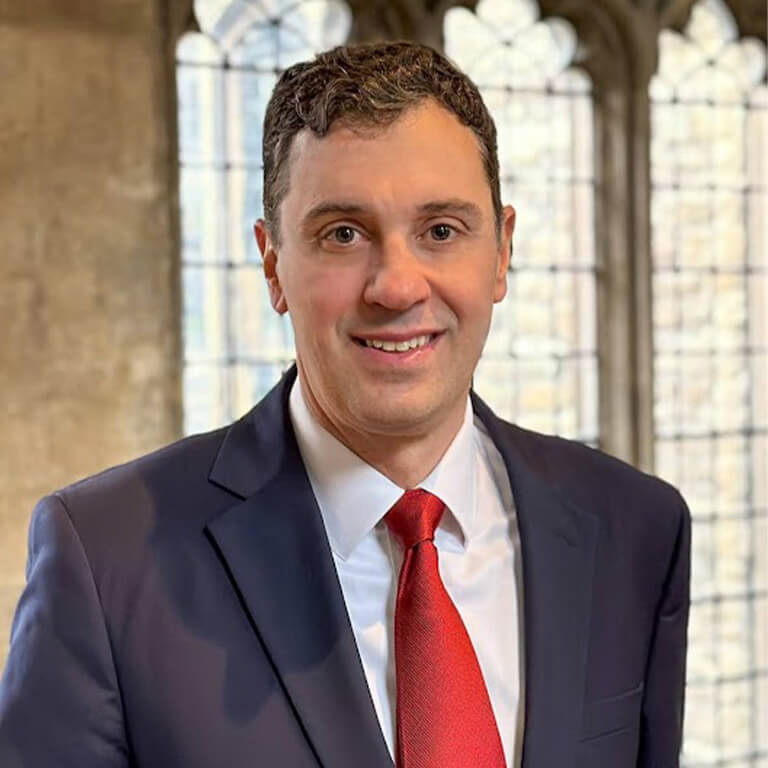
John D. Ciorciari has research interests in international politics and international law. Much of his work focuses on international politics in the Indo-Pacific region. His first book, The Limits of Alignment (2010), explored the foreign policy preferences of small states and middle powers navigating great-power rivalry. He has written on U.S., Chinese and Indian foreign policies and engagement in Southeast Asia, and he co-edited The Courteous Power (2021) with Kiyoteru Tsutsui, examining Japan’s distinctive approach to the region.
Ciorciari also has published widely on peacebuilding, including studies of United Nations interventions and international criminal tribunals. He is the author of Sovereignty Sharing in Fragile States (2021), examining when and how international actors have shared core governance functions with sovereign states including Cambodia, Guatemala, Lebanon, Liberia, Sierra Leone, and Timor Leste. He has conducted extensive research on hybrid criminal tribunals and co-authored the book Hybrid Justice (2014) with Anne Heindel, a detailed account of law and politics at the UN-backed Khmer Rouge tribunal in Cambodia.
Before joining IU, Ciorciari was a Professor at the University of Michigan’s Gerald R. Ford School of Public Policy, where he served as Associate Dean for Research and Policy Engagement and as director of the Weiser Diplomacy Center and International Policy Center. He has been an academic visitor at the University of Oxford, an Andrew Carnegie Fellow, an Asia Society Fellow, a postdoctoral fellow at Stanford, a policy official in the U.S. Treasury Department’s Office of International Affairs, and an associate at the international law firm of Davis Polk & Wardwell. He is a longstanding senior legal advisor to the Documentation Center of Cambodia.
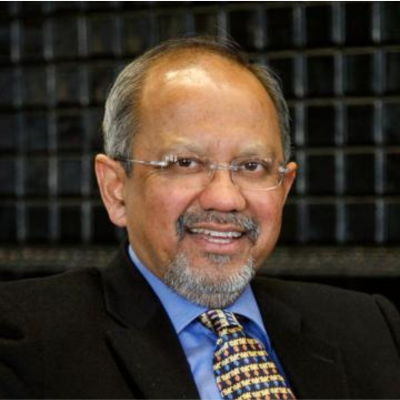
Šumit Ganguly is a senior fellow at the Hoover Institution and director of its Huntington Program on Strengthening US-India Relations. He is also the Rabindranath Tagore Professor in Indian Cultures and Civilizations, Emeritus, at Indiana University in Bloomington, where he served as distinguished professor and professor of political science and directed programs on India studies and on American and global security. He was previously on the faculty of the University of Texas at Austin, Hunter College, the Graduate Center of the City University of New York, and James Madison College of Michigan State University. He has also taught at Columbia University, Sciences Po (Paris, France), the US Army War College, the University of Heidelberg (Germany), Northwestern University, and the Rajaratnam School of International Studies at Nanyang Technological University (Singapore). He serves on the board of directors of the American Friends of the Alexander von Humboldt Foundation.
His honors include a Humboldt Research Fellowship (Alexander von Humboldt Foundation, Germany), the Pravasi Bharatiya Samman award (government of India), the Medal of the Chamber of Deputies (Italy), distinguished alumnus of Berea College, and distinguished alumnus of the Department of Political Science at the University of Illinois-Urbana/Champaign. He is also an elected member of the American Academy of Arts and Sciences and a life member of the Council on Foreign Relations. He has been a fellow and a guest scholar at the Woodrow Wilson International Center for Scholars (Washington, DC); a senior fellow at the Foreign Policy Research Institute; a visiting fellow at the Center for International Security and Cooperation and at the Center for Democracy, Development, and the Rule of Law (both at Stanford University); a visiting fellow at the German Institute of International and Area Studies (Hamburg); a distinguished visiting fellow at the Institute for Defense Studies and Analysis (New Delhi); the Asia Chair (research) at Sciences Po (Paris); and a visiting fellow at the Cooperative Monitoring Center (Sandia National Laboratory, Albuquerque, New Mexico). His research and writing focused on South Asia have been supported by grants from the Asia Foundation, the Smith Richardson Foundation, the Ford Foundation, the Carnegie Corporation of New York, the American Institute of Indian Studies, the W. Alton Jones Foundation, the US departments of State and Defense, and the United States Institute of Peace.
Dr. Ganguly is co-editor in chief of the International Studies Review and serves on the editorial boards of International Security, the Journal of Democracy, Foreign Policy Analysis, Asian Security, Small Wars and Insurgencies, Pacific Affairs, Modern Asian Studies, the International Journal of Development and Conflict, the India Review, the Nonproliferation Review, the Washington Quarterly, and Current History.He is a columnist for Foreign Policy and the founding editor of the India Review,Asian Security, and Indian Politics and Policy. Previously, he has been an associate editor at International Security and International Studies Quarterly and a contributing editor at Asian Affairs. Ganguly is the author or editor of more than twenty books, including Deadly Impasse: Indo-Pakistani Relations at the Dawn of a New Century (2016); The Oxford Short Introduction to Indian Foreign Policy (2018, 2015); How Rivalries End (2013, coauthored with William R. Thompson and Karen Rasler), which won the J. David Singer Award from the International Studies Association; The Crisis in Kashmir (1999, 1997); Fearful Symmetry: India and Pakistan under the Shadow of Nuclear Weapons (2005, coauthored with Devin Hagerty); The Sino-Indian Rivalry (2023, co-edited with Manjeet S. Pardesi and William R. Thompson); Understanding Contemporary India (3rd edition 2021, co-edited with Neil Devotta); The Oxford Handbook of Indian Politics (2024, co-edited with Eswaran Sridharan); and, most recently, The Troubling State of India’s Democracy (2024, co-edited with Larry Diamond and Dinsha Mistree).
Ian Hall is a Professor of International Relations. He is also an Academic Fellow of the Australia India Institute at the University of Melbourne and an executive editor of Asian Security. Prior to his appointment at Griffith, he taught at the University of St Andrews, the University of Adelaide, and the Australian National University. He served as a co-editor-in-chief of the Australian Journal of International Affairs between 2018 and 2023.
His research focuses on India's international relations and Indo-Pacific affairs. He is the author of three books, including Modi and the Reinvention of Indian Foreign Policy (Bristol University Press, 2019), the editor of several volumes and special issues, and has published many scholarly articles and chapters. His research has appeared in the Australian Journal of International Affairs, European Journal of International Relations, International Affairs, and Third World Quarterly. His research has been supported with grants from the Australian Research Council, the Department of Defence, the Department of Foreign Affairs and Trade, and the Ministry of Foreign Affairs of Japan.
He teaches security studies and supervises research students on Indo-Pacific security. He contributes to professional training and executive education programs for Commonwealth and regional public servants. He is a regular contributor to public and policy debates. He has participated in track II dialogues with India, Indonesia, Japan, Pakistan, the Philippines, South Korea, and the UK, and ran an Australia-India-Japan Trilateral for the Griffith Asia Institute from 2017 until 2023. He is often quoted in the media.
Andrew Kydd received his Ph. D. in Political Science from the University of Chicago in 1996 and taught at the University of California, Riverside and Harvard University before joining the Department of Political Science at the University of Wisconsin in the fall of 2007. His interests center on the game theoretic analysis of international security issues such as proliferation, terrorism, trust and conflict resolution. He has published articles in the American Political Science Review, International Organization, World Politics, and International Security, among other journals. His book, Trust and Mistrust in International Relations, was published in 2005 by Princeton University Press and won the 2006 Conflict Processes Best Book Award.
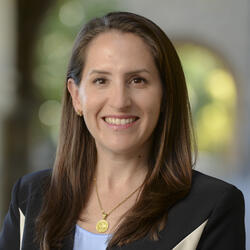
Oriana Skylar Mastro is a Center Fellow at the Freeman Spogli Institute for International Studies and Courtesy Assistant Professor of Political Science at Stanford University, where her research focuses on Chinese military and security policy, Asia-Pacific security issues, war termination, and coercive diplomacy. She is also a nonresident scholar at the Carnegie Endowment for International Peace and a member of the Council on Foreign Relations. She was previously an assistant professor of security studies at Georgetown University. Mastro continues to serve in the United States Air Force Reserve, for which she currently works at the Pentagon as Deputy Director of Reserve Global China Strategy. For her contributions to U.S. strategy in Asia, she won the Individual Reservist of the Year Award in 2016 and 2022 (FGO).
She has published widely, including in International Security, Security Studies, Foreign Affairs, the Journal of Strategic Studies, The Washington Quarterly, the Economist, and the New York Times. Her most recent book, Upstart: How China Became a Great Power (Oxford University Press, 2024), evaluates China’s approach to competition. Her book, The Costs of Conversation: Obstacles to Peace Talks in Wartime (Cornell University Press, 2019), won the 2020 American Political Science Association International Security Section Best Book by an Untenured Faculty Member.
She holds a B.A. in East Asian Studies from Stanford University and an M.A. and Ph.D. in Politics from Princeton University.
Her publications and commentary can be found at orianaskylarmastro.com and on Twitter @osmastro.
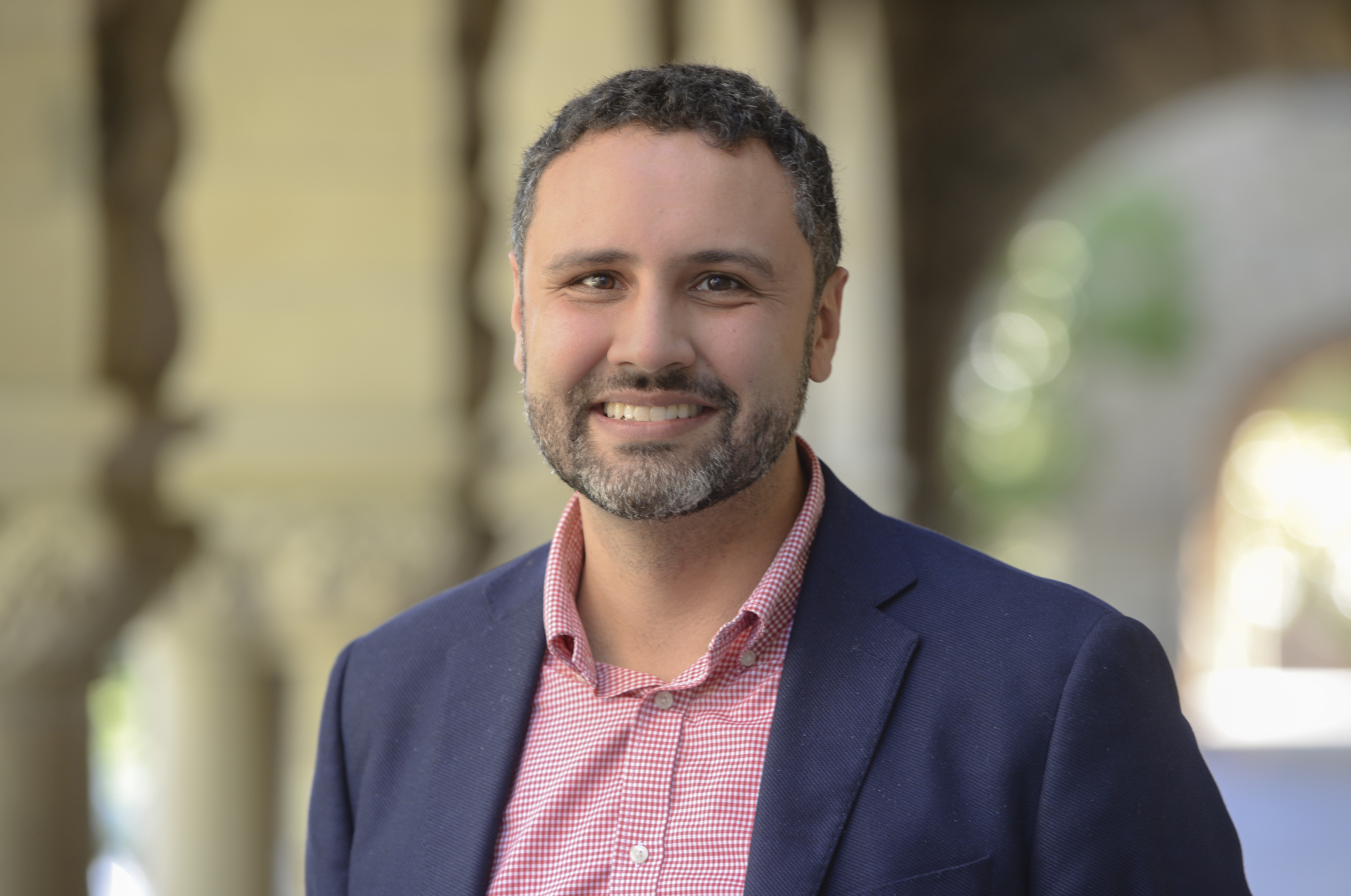
Dinsha Mistree is a research fellow at the Hoover Institution, a research affiliate at Stanford’s Freeman Spogli Institute for International Studies, and a research affiliate at the Neukom Center for the Rule of Law at Stanford Law School, where he teaches courses on state building and global poverty.
Mistree works on issues related to the US-India relationship. Recent and forthcoming scholarship includes a book project on the performance of the Indian diaspora in the United States and a forthcoming study on the history of the US-India Civil Nuclear Agreement. He also studies governance and economic growth in developing countries, with a special focus on India. To this end, Mistree is working on a comparison of India's computer hardware and software industries as well as a project on the regulation of food adulteration across South Asia. Additionally, he has conducted one of the largest quantitative studies of management practices in Indian higher education as well as a series of education-focused experiments with Indian job seekers. These experiments include measuring the employment returns of learning English, how to effectively teach digital literacy, and how to minimize interpersonal conflict. Apart from his scholarly work, Mistree publishes in a range of policy outlets.
Mistree holds a PhD and MA in politics from Princeton University, along with an SM and SB from the Massachusetts Institute of Technology. He previously held a postdoctoral fellowship at Stanford’s Center on Democracy, Development, and the Rule of Law and was a visiting scholar at the Indian Institute of Management-Ahmedabad.
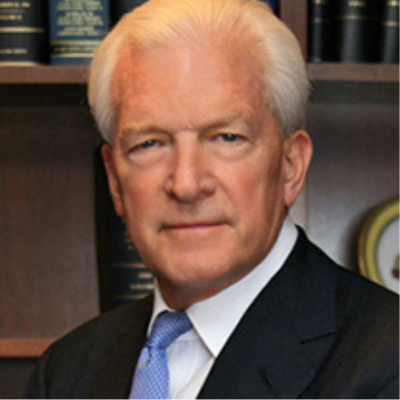
Ambassador David Mulford is a distinguished visiting fellow at the Hoover Institution at Stanford University. In this role, Ambassador Mulford focuses on research, writing, and activities related to global economic integration, including the legal and political environments of trade agreements and their management. He concentrates his efforts on economic growth in the Indian subcontinent and the trend of receding globalization in developed economies.
Before joining the Hoover Institution, Ambassador Mulford served as the vice chairman international at Credit Suisse from 2009 to 2016. In this role, Ambassador Mulford worked with a range of clients across the integrated bank with a particular focus on governments, as well as corporate clients, across the globe.
Ambassador Mulford rejoined Credit Suisse in March 2009 after spending five years as the US ambassador to India. Ambassador Mulford came to India in early 2004, at a time when India-US relations were undergoing a dramatic shift and the strategic partnership between New Delhi and Washington was gaining momentum as the two sides began working closely together on an unprecedented range of issues. Ambassador Mulford was a major player for five years building a strong partnership between the United States and India, the world’s two largest multicultural democracies.
During his tenure, India and the United States achieved unprecedented economic cooperation and exponential expansion in business, health, finance, science, agriculture, education, and military cooperation. Ambassador Mulford negotiated the US-India Civil Nuclear Initiative from March 2005 through its final agreement as the United States–India Nuclear Cooperation Approval and Nonproliferation Enhancement Act in October 2008. Following the Mumbai terror attacks, Ambassador Mulford facilitated Washington’s offer to collaborate with New Delhi by way of information sharing, investigative collaboration, and cooperation, strengthening both countries’ pledge in the war against international terrorism. Ambassador Mulford was also the founder of the US-India CEO Forum.
Before being nominated as the US ambassador to India, Mulford served as chairman international and member of the Executive Board of Credit Suisse, based in London. From 1992 to 2003, Mulford was responsible for leading Credit Suisse’s worldwide, large-scale privatization business and other corporate and government advisory assignments.
Mulford was undersecretary and assistant secretary of the US Treasury for International Affairs from 1984 to 1992. He served as the senior international economic policy official at the Treasury under Secretaries Regan, Baker, and Brady. the highlights of Mulford’s responsibilities and accomplishments at the Treasury Department include US deputy for coordination of economic policies with other G-7 industrial nations; head of the administration’s yen/dollar negotiations with Japan; the administration’s senior adviser on financial assistance to Russia and other states of the former Soviet Union; leadership of the administration’s international debt strategy, and the development and implementation of the Baker / Brady Plans and President Bush’s Enterprise Initiative for the Americas.
Mulford also led both the US delegation to negotiate the establishment of the European Bank for Reconstruction and Development, as well as the G-7 negotiations to reduce Poland’s official bilateral debt in 1991.
Before his government service, Mulford was a managing director and head of International Finance at White, Weld & Co., with responsibility for coordinating efforts with Credit Suisse on international financial business from 1966 to 1974. He was then seconded to the Saudi Arabian Monetary Agency (SAMA), where he served as a senior investment adviser from 1974 to 1983. His responsibilities included managing the investment of Saudi oil revenues and developing a comprehensive investment program for SAMA. He also served as a special assistant to the secretary and deputy secretary of the Treasury as a White House Fellow during 1965 to 1966, in the first year of the White House Fellowship Program.
Mulford received a doctor of philosophy degree from Oxford University, an MA in political science from Boston University, and a BA in economics, cum laude, from Lawrence University in Appleton, Wisconsin. He did graduate studies at the University of Cape Town, South Africa, in 1960 and has published two books on Zambia. He received an honorary doctor of laws degree from Lawrence University, the Legion d’Honneur from the president of France, the Distinguished Alumni Award from Boston University, the Alexander Hamilton Award, the highest honor bestowed by the secretary of the Treasury for extraordinary service and benefit to the Treasury Department and the nation, the Order of May for Merit from the President of Argentina, and the Officer’s Cross of the Medal of Merit from the President of Poland.
Dr. Rajesh Rajagopalan is a political scientist specializing in international relations theory and national and international security. He is a faculty member at the Centre for International Politics, Organisation and Disarmament at Jawaharlal Nehru University. He previously served as Chair of the Centre and has held positions including Senior Fellow at the Observer Research Foundation and Deputy Secretary at the National Security Council Secretariat of India. He was also the ICCR Visiting India Chair at Victoria University of Wellington. Dr. Rajagopalan is the author of Fighting Like a Guerrilla and Second Strike, with widely published research on counterinsurgency and nuclear security in South Asia.
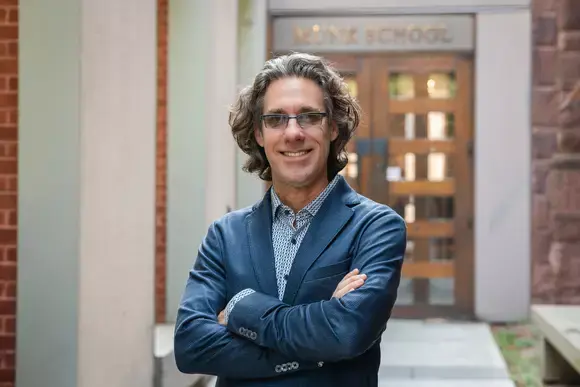
Brian Rathbun is a Professor and Munk Chair in Global Affairs at the Munk School of Global Affairs & Public Policy at The University of Toronto, where he also holds cross-appointments in the departments of Political Science and Psychology. He directs the Trudeau Centre for Peace, Conflict and Justice. His move in 2024 with his wife to Canada, along with a number of other American scholars, was featured in the New York Times and other outlets.
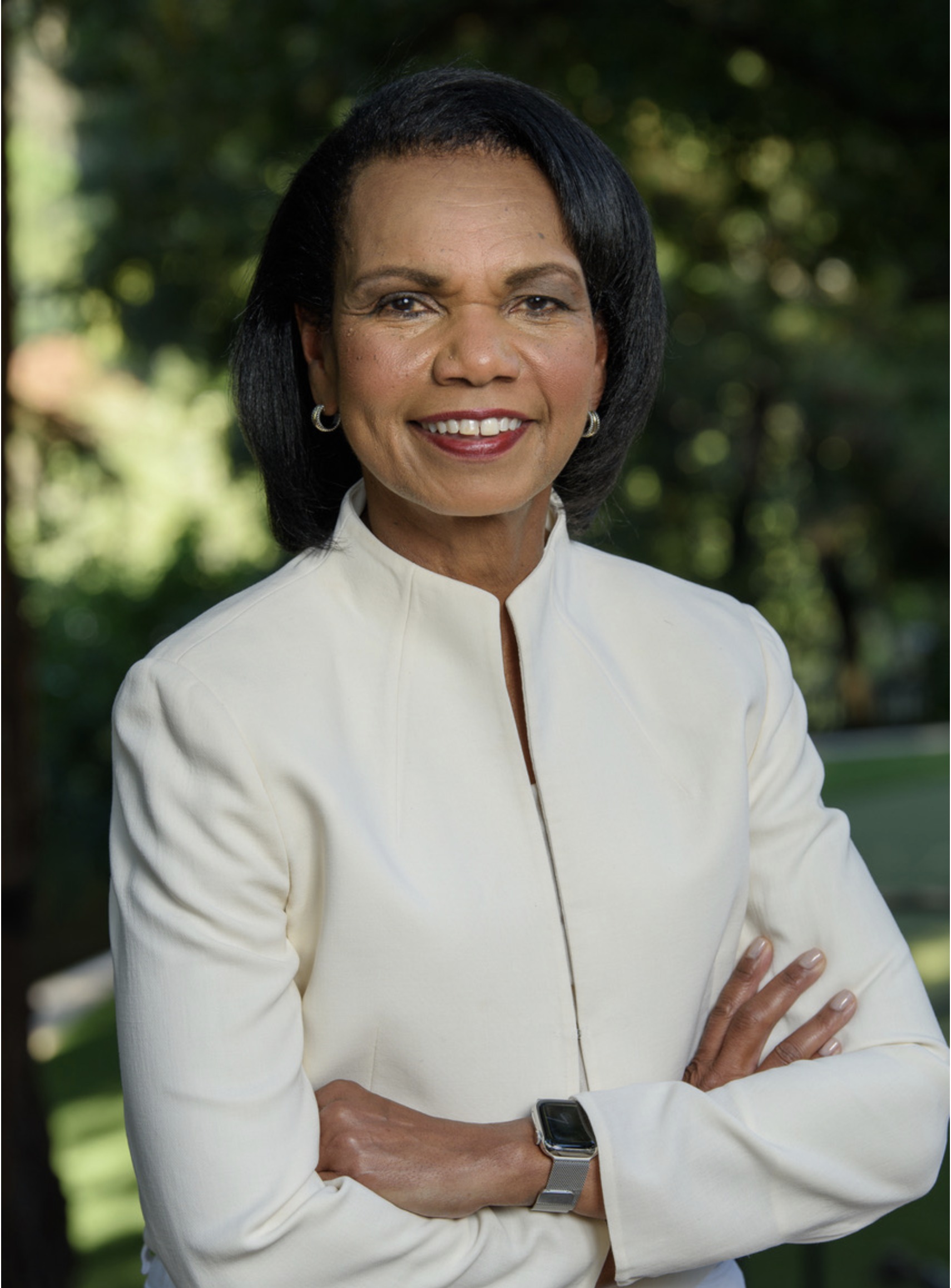
Condoleezza Rice is the Tad and Dianne Taube Director of the Hoover Institution and the Thomas and Barbara Stephenson Senior Fellow on Public Policy. She is the Denning Professor in Global Business and the Economy at the Stanford Graduate School of Business. In addition, she is a founding partner of Rice, Hadley, Gates & Manuel LLC, an international strategic consulting firm.
From January 2005 to January 2009, Rice served as the 66th Secretary of State of the United States, the second woman and first black woman to hold the post. Rice also served as President George W. Bush’s Assistant to the President for National Security Affairs (National Security Advisor) from January 2001 to January 2005, the first woman to hold the position.
Rice served as Stanford University’s provost from 1993 to 1999, during which time she was the institution’s chief budget and academic officer. As Professor of Political Science, she has been on the Stanford faculty since 1981 and has won two of the university’s highest teaching honors.
From February 1989 through March 1991, Rice served on President George H.W. Bush’s National Security Council staff. She served as Director, then Senior Director, of Soviet and East European Affairs, as well as Special Assistant to the President for National Security. In 1986, while an International Affairs Fellow of the Council on Foreign Relations, Rice also served as Special Assistant to the Director of the Joint Chiefs of Staff.
She has authored and co-authored numerous books, most recently To Build a Better World: Choices to End the Cold War and Create a Global Commonwealth (2019), co-authored with Philip Zelikow. Among her other volumes are three bestsellers, Democracy: Stories from the Long Road to Freedom (2017); No Higher Honor: A Memoir of My Years in Washington (2011); and Extraordinary, Ordinary People: A Memoir of Family (2010). She also wrote Political Risk: How Businesses and Organizations Can Anticipate Global Insecurity (2018) with Amy B. Zegart; Germany Unified and Europe Transformed: A Study in Statecraft (1995) with Philip Zelikow; edited The Gorbachev Era (1986) with Alexander Dallin; and penned The Soviet Union and the Czechoslovak Army; 1948-1983: Uncertain Allegiance (1984).
In 1991, Rice co-founded the Center for a New Generation (CNG), an innovative, after-school academic enrichment program for students in East Palo Alto and East Menlo Park, California. In 1996, CNG merged with the Boys & Girls Club of the Peninsula, an affiliate club of the Boys & Girls Clubs of America (BCGA). CNG has since expanded to local BGCA chapters in Birmingham, Atlanta, and Dallas. Rice remains an active proponent of an extended learning day through after-school programs.
Since 2009, Rice has served as a founding partner at Rice, Hadley, Gates, & Manuel LLC, an international strategic consulting firm based in Silicon Valley and Washington, D.C. The firm works with senior executives of major companies to implement strategic plans and expand in emerging markets. Other partners include former National Security Advisor Stephen J. Hadley, former Secretary of Defense Robert M. Gates, and former diplomat, author, and advisor on emerging markets, Anja Manuel.
In 2022, Rice became a part-owner of the Denver Broncos as a part of the Walton-Penner Family Ownership Group. In 2013, Rice was appointed to the College Football Playoff Selection Committee, formerly the Bowl Championship Series. She served on the committee until 2017.
Rice currently serves on the boards of C3.ai, an AI software company; and Makena Capital Management, a private endowment firm. In addition, she is Vice Chair of the Board of Governors of the Boys & Girls Clubs of America and a trustee of the Aspen Institute. Previously, Rice served on various boards, including Dropbox; the George W. Bush Institute; the Commonwealth Club; KiOR, Inc.; the Chevron Corporation; the Charles Schwab Corporation; the Transamerica Corporation; the Hewlett-Packard Company; the University of Notre Dame; the Foundation of Excellence in Education; the John F. Kennedy Center for the Performing Arts; and the San Francisco Symphony.
Born in Birmingham, Alabama, Rice earned her bachelor’s degree in political science, cum laude and Phi Beta Kappa, from the University of Denver; her master’s in the same subject from the University of Notre Dame; and her Ph.D., likewise in political science, from the Graduate School of International Studies at the University of Denver.
Rice is a Fellow of the American Academy of Arts and Sciences and has been awarded over fifteen honorary doctorates.
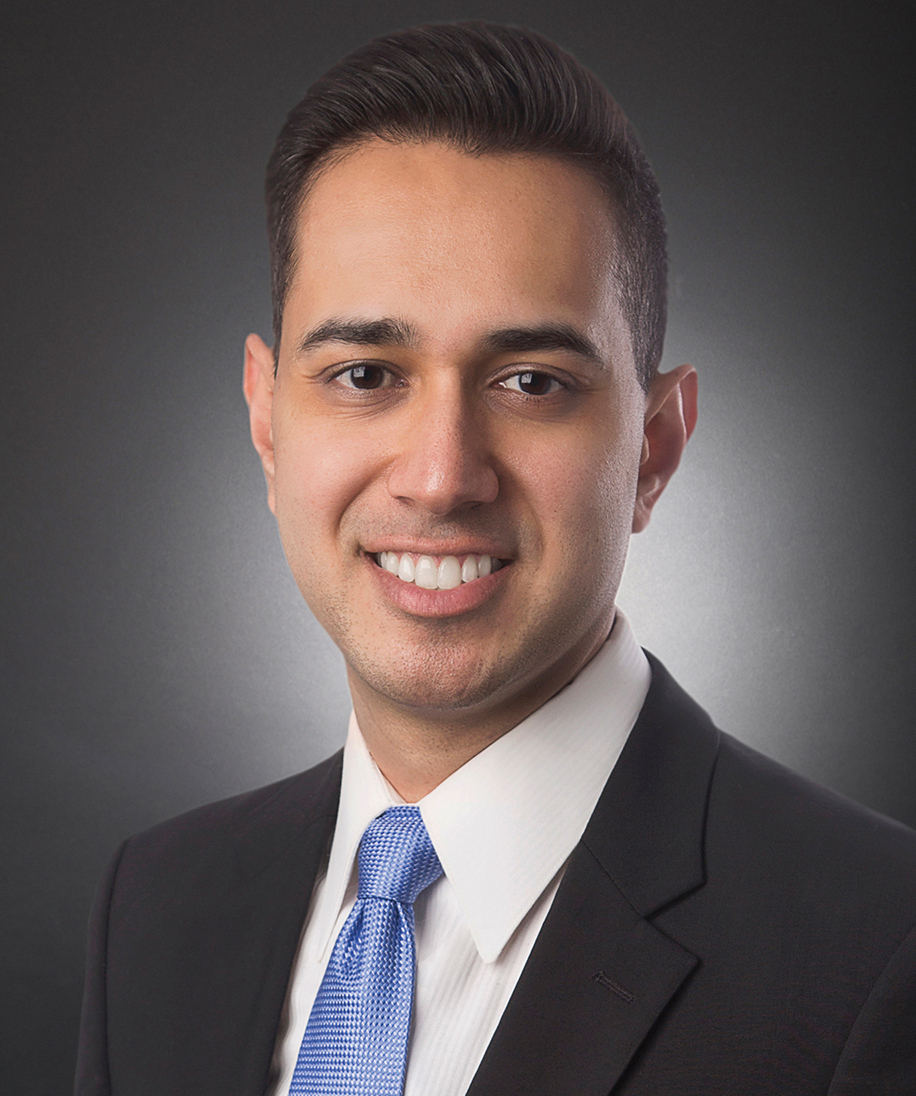
Ronak D. Desai is a visiting fellow at the Hoover Institution at Stanford University.
His work sits at the intersection of law and policy, focusing on the Indian subcontinent, US-India relations, diaspora politics, the US Congress, crisis management, and oversight and investigations.
Desai is a partner and the firmwide leader of both the India and Congressional Investigations practices at Paul Hastings LLP. He advises clients on a broad range of complex investigative, regulatory, litigation, compliance, and public policy matters.
He has extensive legal and policy experience in both the public and private sectors. From 2014 to 2016, he served as counsel to a prominent select committee on Capitol Hill, his fifth time serving in Congress. In the private sector, Desai continues to advise members of Congress on legal, investigative, and foreign policy issues.
Desai serves as general counsel and board director of the Partnership for a Secure America, a foreign policy think tank based in Washington, DC, promoting bipartisanship on Capitol Hill through its flagship Congressional Partnership Program.
He also teaches a popular course on US foreign policy toward the Indian subcontinent at the Johns Hopkins University in Baltimore.
A frequent author and commentator, he writes regularly for leading publications in the United States and the Asia Pacific. He has written across a wide spectrum of outlets, including The Washington Post, Foreign Policy, The Hill, Bloomberg Law, and The National Law Journal.
From 2013, Desai served as a nonresident fellow at the Belfer Center for Science and International Affairs India and South Asia Program, as well as an associate at the Lakshmi Mittal and Family South Asia Institute, both at Harvard University.
He earned his undergraduate degree from the Johns Hopkins University, where he was elected Phi Beta Kappa, and joint public policy and law degrees from the Harvard Kennedy School of Government and Harvard Law School, graduating magna cum laude and receiving the Dean’s Scholar Prize.
Eswaran Sridharan is the Director and Chief Executive Officer of the University of Pennsylvania Institute for the Advanced Study of India (UPIASI), in New Delhi, from its inception in 1997, and was earlier with the Centre for Policy Research, New Delhi. A CASI Non-Resident Scholar, he is a political scientist with research interests in elections, party systems and coalition politics, political economy of development, and international relations theory and Indian foreign policy. He is the author of The Political Economy of Industrial Promotion: Indian, Brazilian and Korean Electronics in Comparative Perspective 1969-1994 (1996); and has co-edited (with Zoya Hasan and R. Sudarshan), India’s Living Constitution: Ideas, Practices, Controversies (2002; 2005); co-edited (with Anthony D’Costa), India in the Global Software Industry: Innovation, Firms Strategies and Development, (2004); co-edited (with Peter de Souza) India’s Political Parties (2006); and edited The India-Pakistan Nuclear Relationship: Theories of Deterrence and International Relations (2007), International Relations Theory and South Asia, Vols. I & II (2011), Coalition Politics and Democratic Consolidation in Asia (2012), Coalition Politics in India: Selected Issues at the Centre and the States (2014) and Eastward Ho? India’s Relations with the Indo-Pacific (2021). He has published over ninety journal articles and chapters in edited volumes. He has held visiting appointments at the University of California, Berkeley, London School of Economics, Institute of South Asian Studies of the National University of Singapore, and Institute of Developing Economies, Tokyo. He has been the Editor-in-Chief of India Review, a refereed Routledge journal, since 2008 and is on the Editorial Advisory Board of Commonwealth and Comparative Politics (Routledge) and Millenial Asia (Sage). He earned his Ph.D. in political science at the University of Pennsylvania and has been a Non-Resident Visiting Scholar at the Center for the Advanced Study of India, University of Pennsylvania since 2001.

Dr. Emily Tallo is a Postdoctoral Fellow at the Center for International Security and Cooperation at Stanford University. She earned her Ph.D. in political science from the University of Chicago in 2025. Her research focuses on the domestic politics of foreign policy and international security, with particular attention to how leaders, bureaucracies, and political parties shape international outcomes, and with a regional emphasis on South Asia and the Global South.
Her dissertation and book project examine when and why leaders politicize foreign policy bureaucracies. The project argues that leaders who distrust these institutions—due to ideological, partisan, or social conflicts predating their tenure—are more likely to politicize them by appointing loyalists, sidelining career professionals, and reshaping institutional rules.
Her additional research uses text-as-data methods to analyze the relationships between political parties, public opinion, and foreign policy, particularly in India.
Dr. Tallo previously worked as a researcher with the South Asia Program at the Stimson Center in Washington, DC. Her commentary has appeared in Foreign Policy, The Washington Post’s Monkey Cage blog, and War on the Rocks. She holds a B.S. in International Studies from Indiana University and an M.A. in political science from the University of Chicago.
She can be reached at etallo@stanford.edu and can be followed on X or Bluesky.